Your Cart
There are currently no items in your cart.
There are currently no items in your cart.

Hand-Cleaners.co.uk is a specialist supplier of commercial hand cleaner, hand sanitizer gel and hand soap dispensers and are authorised distributors for GOJO, PURELL, and Deb Stoko across the UK

It is now common knowledge that Gojo Industries (the manufactures of Gojo & Purell products) have gone into administration, and have withdrawn from the UK/European market.
Unfortunately, there is no stock of refill cartridges available to purchase, as a result, you will need to consider changing over to one of our other dispensing systems.
Please telephone 01384 671505 to discuss this further with one of our helpful sales team.
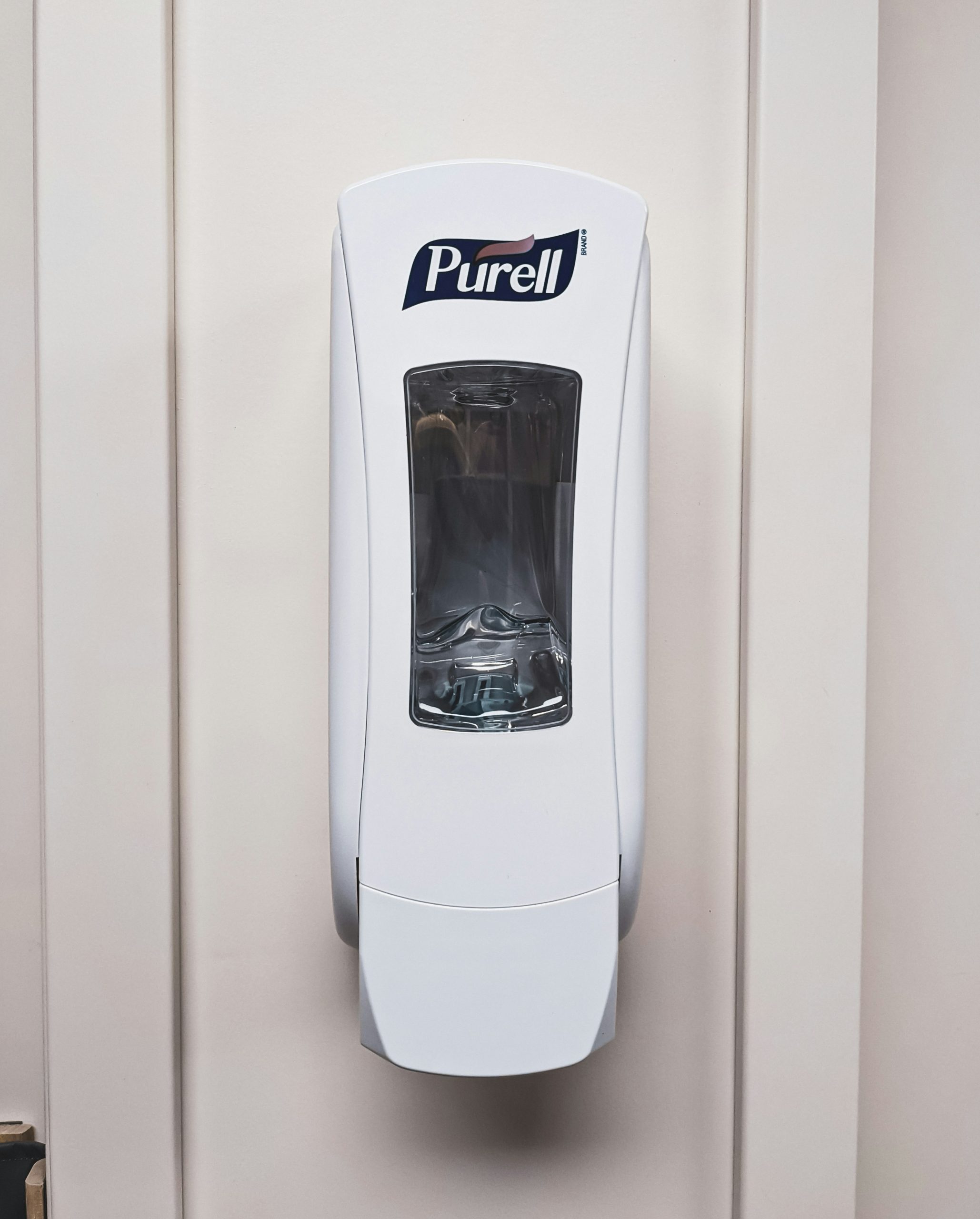
Choosing a soap dispenser or hand sanitiser dispenser often comes down to where people actually need to use it.
Wall-mounted dispensers work well where there is a permanent hygiene point, such as beside a washbasin or at the entrance to a production area. Freestanding dispensers give businesses more flexibility because they can be placed wherever hand hygiene is needed and moved as working patterns change.
Neither arrangement suits every workplace. Capacity, available space, cleaning requirements and how people move through the building should all influence the decision.
Wall-mounted dispensers are particularly useful in permanent locations where people expect to find soap or sanitiser every day.
Washrooms are the obvious example. Positioning a dispenser beside the basin keeps the product within easy reach and avoids taking up worktop or floor space.
They can also work well at workshop entrances, next to staff changing areas or beside food preparation handwashing points.
Hand Cleaners currently stocks wall-mounted systems from brands including Deb Stoko, GOJO, Dolphin and Opus, with options covering cartridge and bulk-fill formats.
Once fitted, the dispenser remains in a consistent location. This can make checking and refilling easier because cleaning staff always know where each unit is positioned.
Freestanding dispensers can be placed where there is no convenient wall or permanent fixture.
They are useful around reception areas, temporary workspaces, events and entrances where large numbers of people pass through. Hand Cleaners’ current sanitiser range includes freestanding stations alongside conventional wall-mounted units.
Their main advantage is flexibility. If a building layout changes or a temporary hygiene point is required elsewhere, the station can usually be relocated without drilling additional holes or altering walls.
That can also be useful in warehouses and larger workplaces where activity shifts between different areas during the year.
Wall-mounted dispensers generally make better use of limited floor space.
A washroom with narrow access routes may have little room for a stand, whereas a wall-mounted unit occupies only a small area beside the basin. Hand Cleaners’ Opus one-litre dispenser, for example, measures approximately 27.5cm high, 16cm wide and 10.5cm deep.
Freestanding stations require more room around their base. Their advantage is that they can be positioned away from walls, making them useful in open entrances, corridors or large reception spaces.
Before choosing, consider whether the unit could obstruct doors, walkways or wheelchair access.
Both require regular attention.
Dispensers should be checked for empty refills, residue around the outlet and general cleanliness. Wall-mounted systems can make this routine straightforward because the unit stays in one place.
Some systems are specifically designed to make cleaning easier. The Opus wall-mounted dispenser, for example, uses a removable mounting plate and disposable pump and cartridge system.
Freestanding stations need the same dispenser maintenance, while the stand and base may also need cleaning because people can touch or walk around them.
Both wall-mounted and freestanding arrangements can incorporate manual or automatic dispensers.
Touch-free dispensers release a measured amount of soap or sanitiser when hands are placed beneath the sensor. This can reduce contact with the dispenser itself.
Manual units are generally simpler because they do not depend on batteries or sensors.
Hand Cleaners currently stocks both manual and touch-free wall-mounted systems, including one-litre Opus dispensers capable of accepting different soap and sanitiser cartridges.
The best choice depends on user numbers, the working environment and how frequently the unit will be checked.
Start by looking at where people naturally stop to wash or sanitise their hands.
If the location will remain the same for years, a wall-mounted dispenser is often the simplest arrangement. If hygiene needs change regularly or the dispenser needs to sit in an open area, a freestanding station may provide greater flexibility.
Capacity matters too. A busy entrance can empty a small sanitiser container quickly, while a quieter washroom may take considerably longer to use the same amount.
The most effective dispenser is usually the one positioned somewhere convenient, kept filled and easy for staff or visitors to use without having to think about where it is.
They often work well in washrooms because they use little floor space and can be positioned conveniently beside the handwashing area.
Yes. Mobility is one of their main advantages, although the design and weight of the particular station will determine how easily it can be relocated.
They can reduce the number of times users physically touch the dispenser. The unit still needs regular cleaning and maintenance.
A freestanding station can work particularly well where there is no suitable wall nearby. Capacity and refill frequency should also be considered in high-traffic areas.
There is no single interval for every workplace. Busy locations may need checking several times a day, while quieter areas may require less frequent attention. The important point is to prevent units from running empty.

